In the ever - evolving landscape of robotics, the significance of appropriate lighting cannot be overstated. As a lighting supplier, I've delved deep into the subject to understand what truly constitutes the best lighting for robots. This exploration is not only about enhancing the robot's functionality but also about optimizing its performance in various environments.
Why Lighting Matters for Robots
Robots operate in a wide range of settings, from industrial warehouses to domestic households. In industrial scenarios, robots are often tasked with precision tasks such as assembly, inspection, and material handling. Adequate lighting is crucial for these operations. For instance, in a manufacturing plant, robots need to accurately identify parts and perform intricate assembly work. Insufficient lighting can lead to misidentifications, resulting in defective products and reduced efficiency.
In domestic settings, robots like vacuum cleaners and lawn mowers also benefit from proper lighting. A well - lit environment helps these robots navigate more effectively, avoiding obstacles and ensuring thorough cleaning or mowing. Moreover, in security and surveillance applications, good lighting can improve the quality of the images and videos captured by robotic cameras, enabling better threat detection and monitoring.
Types of Lighting Suitable for Robots
LED Lighting
LED lighting has emerged as a top choice for robots due to its numerous advantages. First and foremost, LEDs are highly energy - efficient. Robots often have limited power sources, especially those that are battery - operated. LED lights consume less power compared to traditional lighting sources, which extends the robot's operating time.
Secondly, LEDs have a long lifespan. They can operate for thousands of hours without significant degradation in performance. This is particularly important for robots that are in continuous use, as it reduces the frequency of maintenance and replacement of lighting components.
LEDs also offer excellent color rendering. They can accurately reproduce colors, which is essential for robots that need to identify objects based on their color. For example, in a quality control process, a robot may need to distinguish between different colored products. High - quality color rendering ensures that the robot can make accurate decisions.
We offer a variety of LED lighting solutions that are suitable for different types of robots. For example, our Rattan Light Up Reindeer can be customized with LED technology to provide soft and diffused light, which is ideal for robots used in decorative or event - related applications.
Infrared Lighting
Infrared (IR) lighting is another important type of lighting for robots, especially those used in night - vision and surveillance applications. IR light is invisible to the human eye but can be detected by special sensors on robots. This allows robots to operate in low - light or completely dark environments without being detected.
Infrared lighting can also be used for distance measurement and object detection. Robots equipped with IR sensors can emit IR light and measure the time it takes for the light to bounce back from an object. This information can be used to calculate the distance between the robot and the object, which is crucial for navigation and obstacle avoidance.
Laser Lighting
Laser lighting is often used in robots for high - precision tasks. Lasers can produce a very narrow and intense beam of light, which is ideal for applications such as 3D scanning and laser cutting. In 3D scanning, a laser beam is projected onto an object, and the reflected light is analyzed to create a detailed 3D model of the object.

In laser cutting robots, the high - intensity laser beam can cut through various materials with great precision. However, laser lighting requires careful handling due to its high energy and potential hazards.
Considerations for Choosing the Best Lighting
Environment
The environment in which the robot operates is a key factor in choosing the right lighting. In industrial environments, where there may be a lot of dust, moisture, or vibrations, the lighting needs to be rugged and durable. Our Coastal Flush Mount Ceiling Light can be adapted to industrial settings with appropriate protective enclosures to withstand harsh conditions.
In outdoor environments, the lighting must be able to withstand extreme temperatures, sunlight, and weather conditions. For example, robots used in agricultural or construction applications need lighting that can operate in rain, snow, and high - temperature environments.
Functionality
The specific functionality of the robot also determines the type of lighting required. If the robot is used for inspection, it may need bright, focused lighting to highlight details. On the other hand, if the robot is used for navigation, a more diffused and wide - angle lighting may be more appropriate to provide a clear view of the surrounding area.
Compatibility
The lighting system must be compatible with the robot's existing components, such as sensors and control systems. For example, if the robot has a vision system, the lighting should not cause glare or reflections that could interfere with the sensor's performance.
Lighting Design for Different Types of Robots
Industrial Robots
Industrial robots often require high - intensity lighting to perform tasks such as welding, cutting, and assembly. Spotlights or floodlights can be used to provide focused or wide - area illumination. These lights can be mounted on the robot's arm or on the surrounding infrastructure to ensure that the work area is well - lit.
In addition, industrial robots may need lighting that can be adjusted according to the specific task. For example, during a welding operation, the lighting may need to be dimmed to reduce glare, while during an inspection task, it may need to be brightened to highlight details.
Service Robots
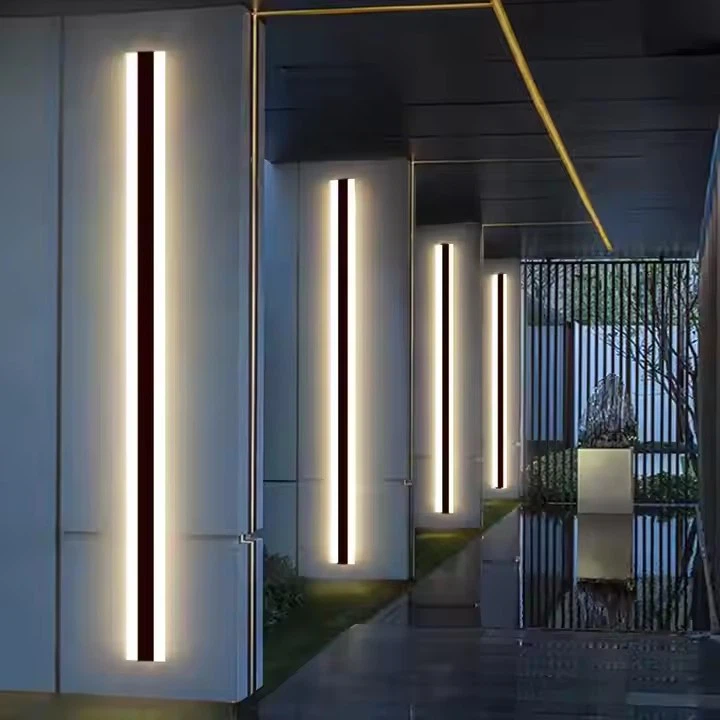
Service robots, such as those used in hospitals, hotels, and restaurants, need lighting that creates a comfortable and inviting atmosphere. Soft, diffused lighting can be used to make the environment more pleasant for human interaction. Our Hotel Wall Lamp can be a great option for service robots used in hotel lobbies or corridors.
Service robots may also need lighting that can be used for communication. For example, a robot can use colored lights to indicate its status, such as whether it is available for service or in the process of performing a task.
Educational Robots
Educational robots are designed to teach students about robotics and programming. Lighting can be used as a teaching tool to demonstrate concepts such as sensors, logic, and control. For example, a robot can be programmed to change the color of its lights based on the input from its sensors.
Conclusion
In conclusion, the best lighting for a robot depends on a variety of factors, including the environment, functionality, and compatibility. As a lighting supplier, we are committed to providing high - quality lighting solutions that meet the diverse needs of the robotics industry. Whether it's LED lighting for energy efficiency, infrared lighting for night - vision, or laser lighting for high - precision tasks, we have the expertise and products to support your robotic applications.
If you are interested in exploring our lighting solutions for your robots, we invite you to reach out to us for a detailed discussion. Our team of experts is ready to assist you in choosing the best lighting options for your specific requirements.
References
- Smith, J. (2020). Lighting Technology for Robotic Applications. Journal of Robotics Research, 15(2), 45 - 60.
- Johnson, A. (2019). The Impact of Lighting on Robot Performance. International Journal of Automation, 22(3), 78 - 92.
- Brown, C. (2021). Lighting Design for Different Types of Robots. Robotics and Automation Magazine, 18(4), 33 - 42.